Find What Matters in Seconds, Not Pages
OVERVIEW
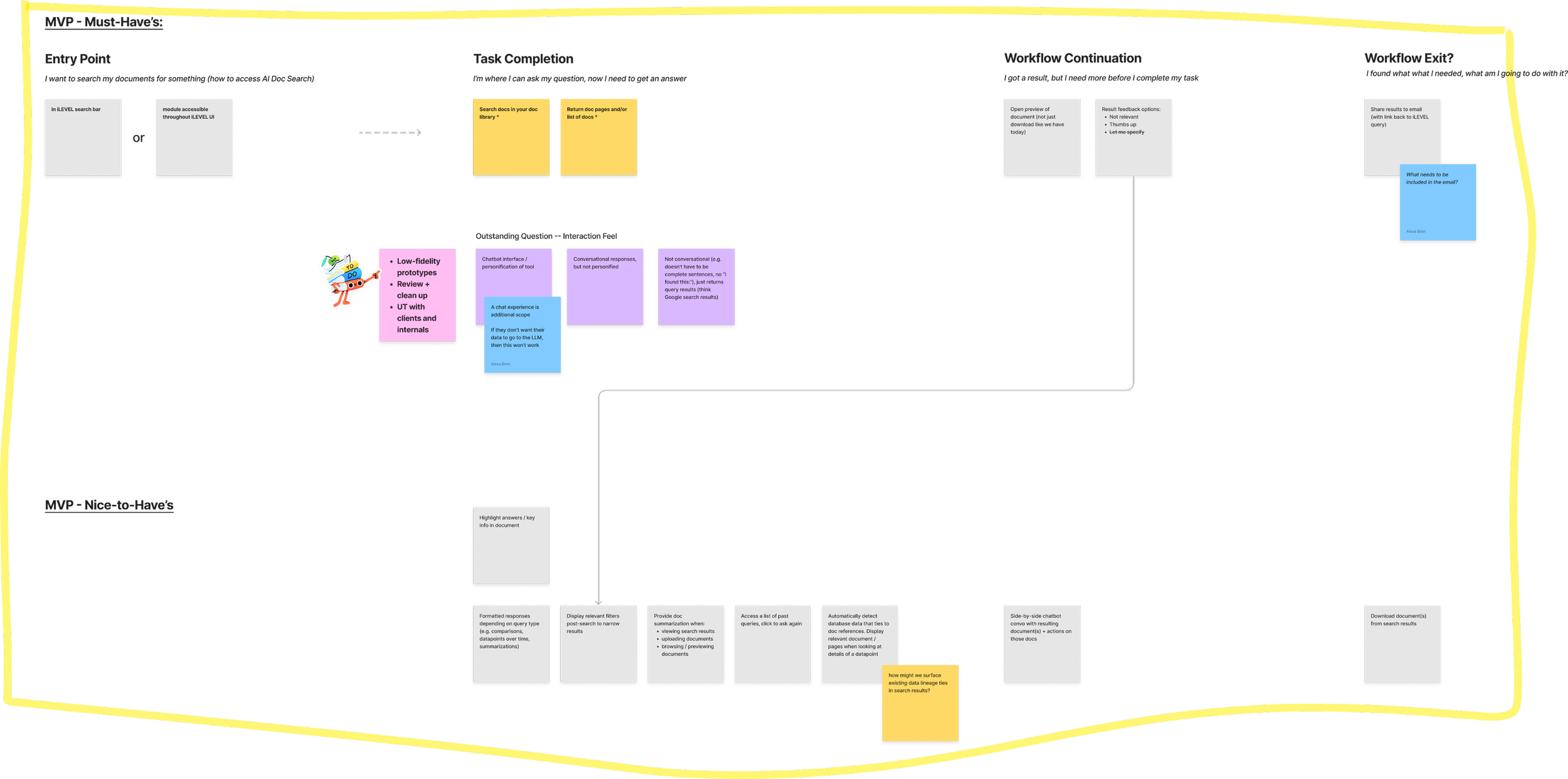
AI Doc Search is an AI-powered experience designed to help financial analysts quickly find and interact with relevant information within large, unstructured documents.
Traditional workflows required users to manually scan dense reports or rely on fragmented search methods, making it difficult to locate precise data efficiently. This project reimagines document search as a query-driven, decision-support experience, allowing users to ask targeted questions, surface relevant insights, and reduce time-to-insight—without combing through entire documents.
As part of a net new product initiative, I worked end-to-end helping define the concept, explore solutions, and validate key decisions through usability testing.
Our Process
-

Role
Co-lead UX Designer (IA, wireframes, prototyping, usability testing)
-

Tools
Figma, Figjam
-

Team
2 PM, 2 UX, 4 engineers
-

Timeline
3-4 months
PROBLEM
iLEVEL was not effectively embedded in front-office workflows, making it difficult for users to independently access and analyze data.
Front-office users lacked the time and expertise to navigate the platform, often relying on administrators to retrieve information or exporting data to Excel for further analysis. This created bottlenecks, slowed decision-making, and limited the platform’s accessibility to expert users. Users often waited hours or days to get answers.
OPPORTUNITY:
Introduce an intelligent, streamlined way for users to access and synthesize information—directly within their existing workflow.
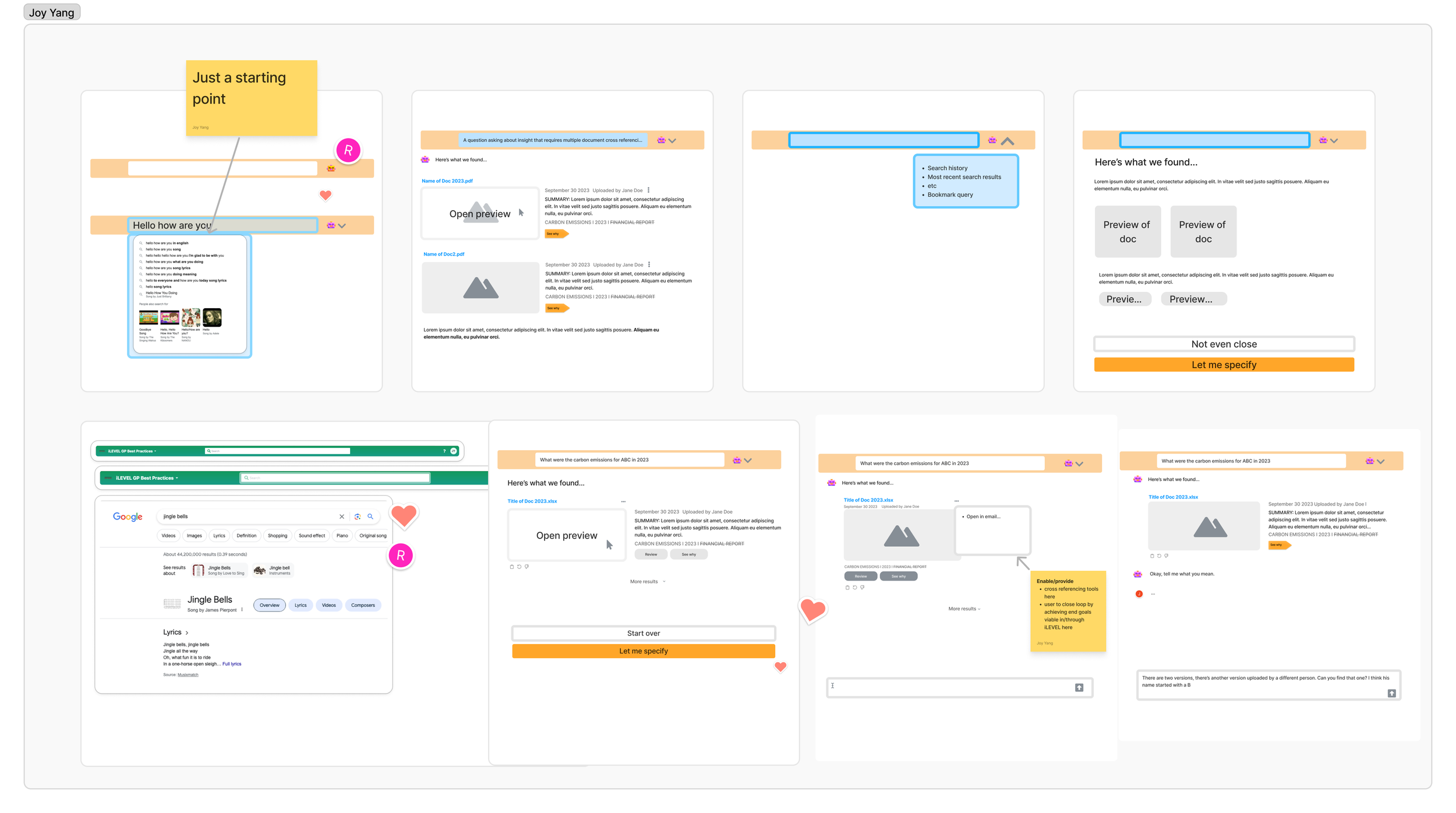
CRAZY 8’s
Diverging on interaction models through rapid ideation—focusing on how users could move from search to answers with less effort.
KEY THEMES
Strong inclination toward search-first experiences
Interest in AI-generated suggestions and summaries
Need for clear connections between results and source documents
Exploration of different layouts (split view, panel, full screen)
USABILITY TESTING
GOAL
Determine the most intuitive and low-friction entry point for AI Doc Search by evaluating how users expect to initiate search and querying within their existing workflow.
METHOD
We conducted moderated usability tests with front-office users to evaluate two potential entry points for AI Doc Search:
A new side panel accessed via a dedicated button
Integration within the existing top search bar
RESULTS
Users showed a clear and unanimous preference for the existing top search bar as the entry point for AI Doc Search (5/5 participants).
Key takeaway:
Embedding AI within familiar interaction patterns increases adoption and lowers the barrier to entry, especially for users already navigating complex workflows.
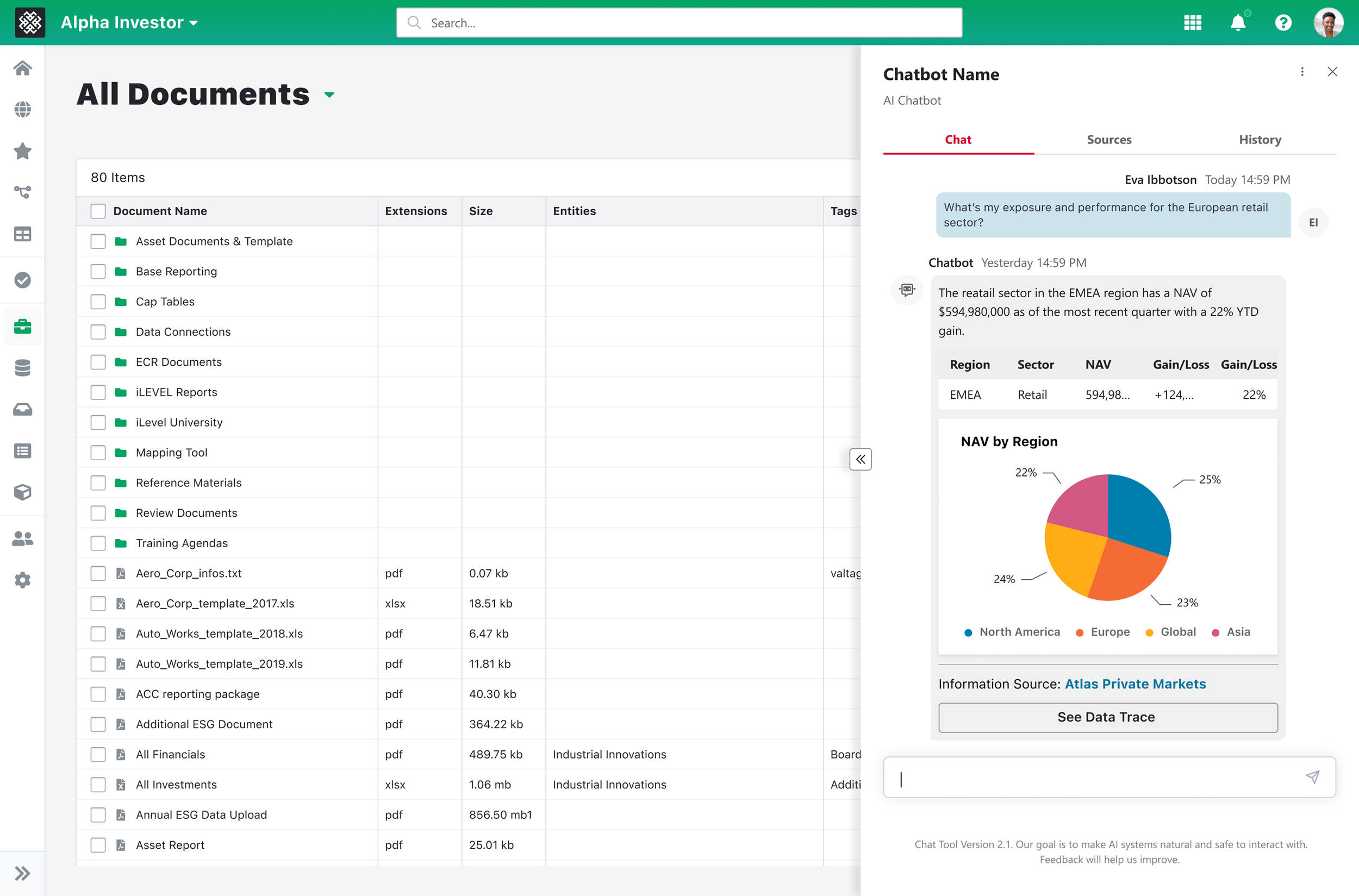
Side panel
VS
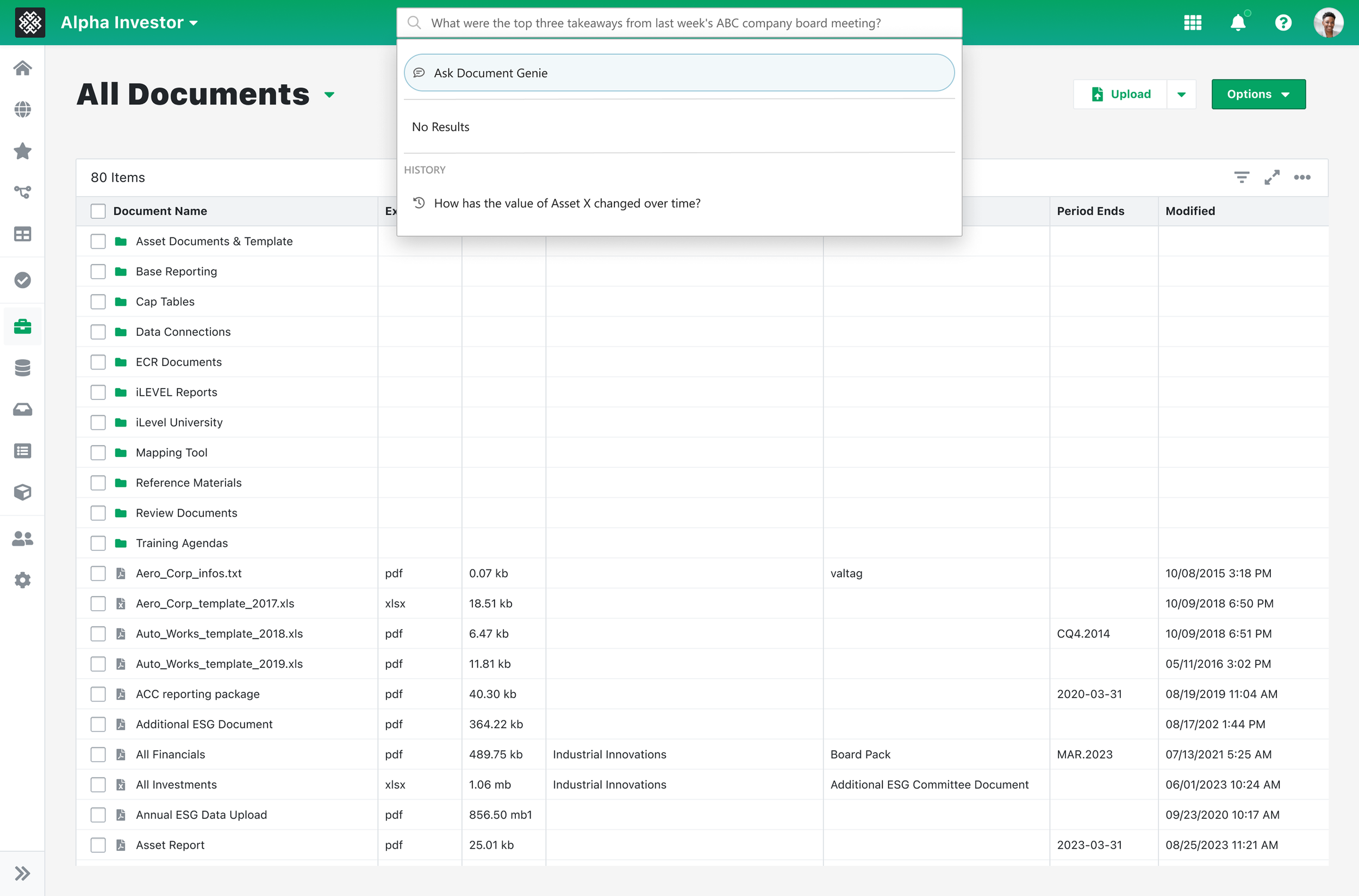
Top search bar
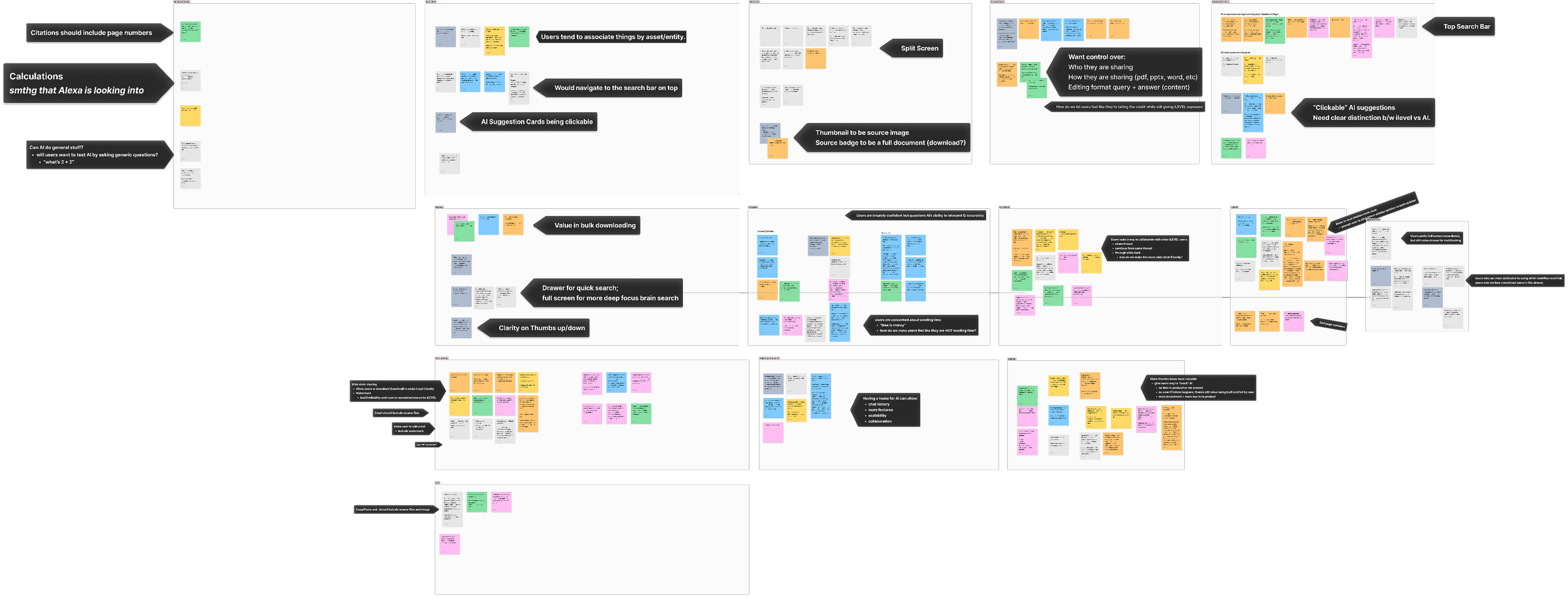
AFFINITY MAPPING
KEY INSIGHTS
1. Users don’t think in “documents” or “databases.”
They think in answers
Users wanted to extract insights, aggregate data, and understand context—not navigate files.
→ Insight: The product should deliver synthesized answers, not just surface sources.
2. iLEVEL was not part of the natural Front Office workflow.
Users relied on external tools and only used iLEVEL in limited scenarios.
→ Insight: Adoption requires embedding into existing workflows—not creating new ones.
3. Multi-source validation is critical in financial workflows.
Users frequently cross-referenced multiple sources to validate information.
→ Insight: Trust is built through connected, contextualized data.
4. Clear distinction between AI output and source data is essential.
Users needed to verify results through citations and source links.
→ Insight: AI must be explainable and traceable to be trusted.
DESIGN DECISIONS
1
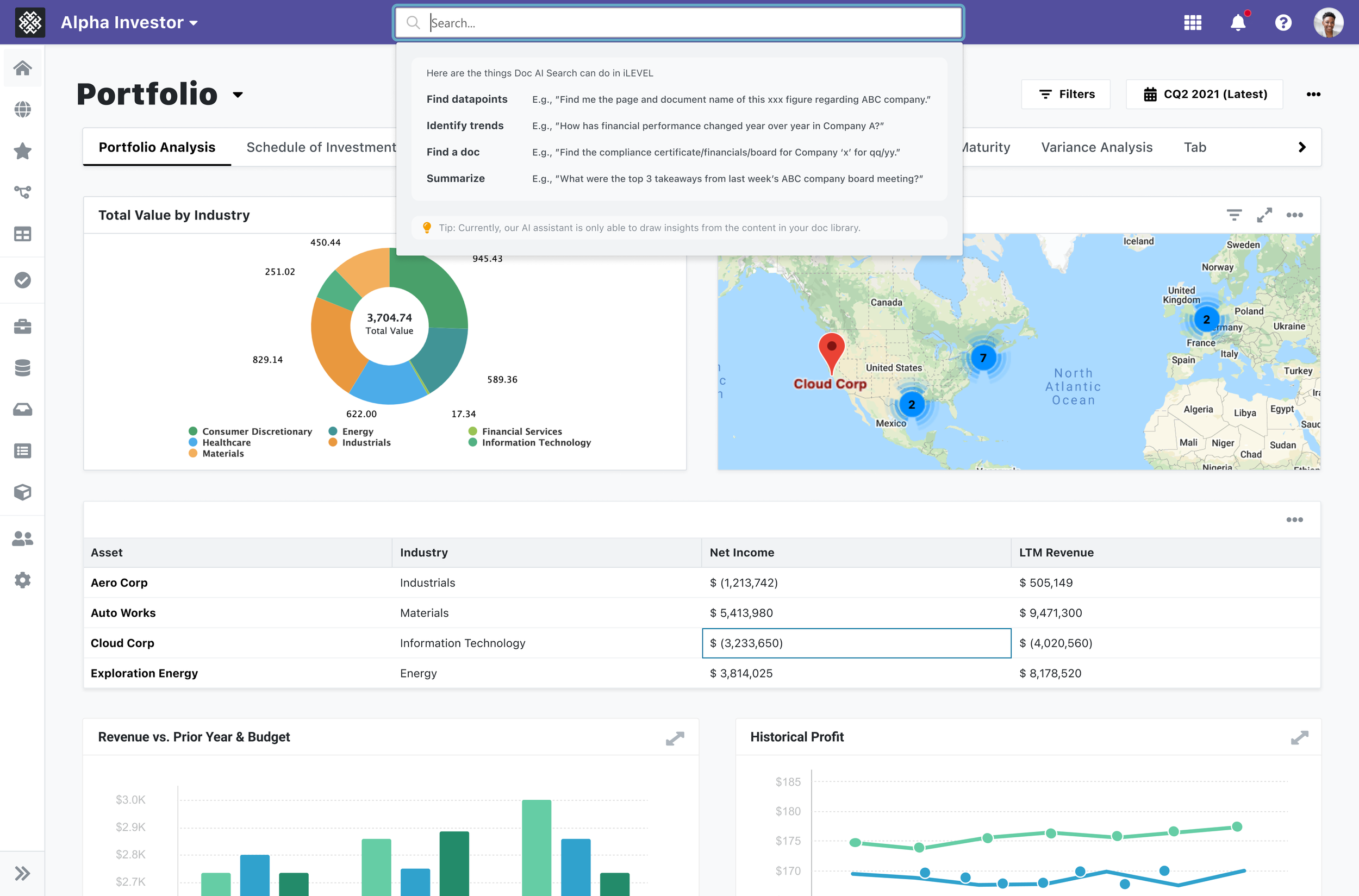
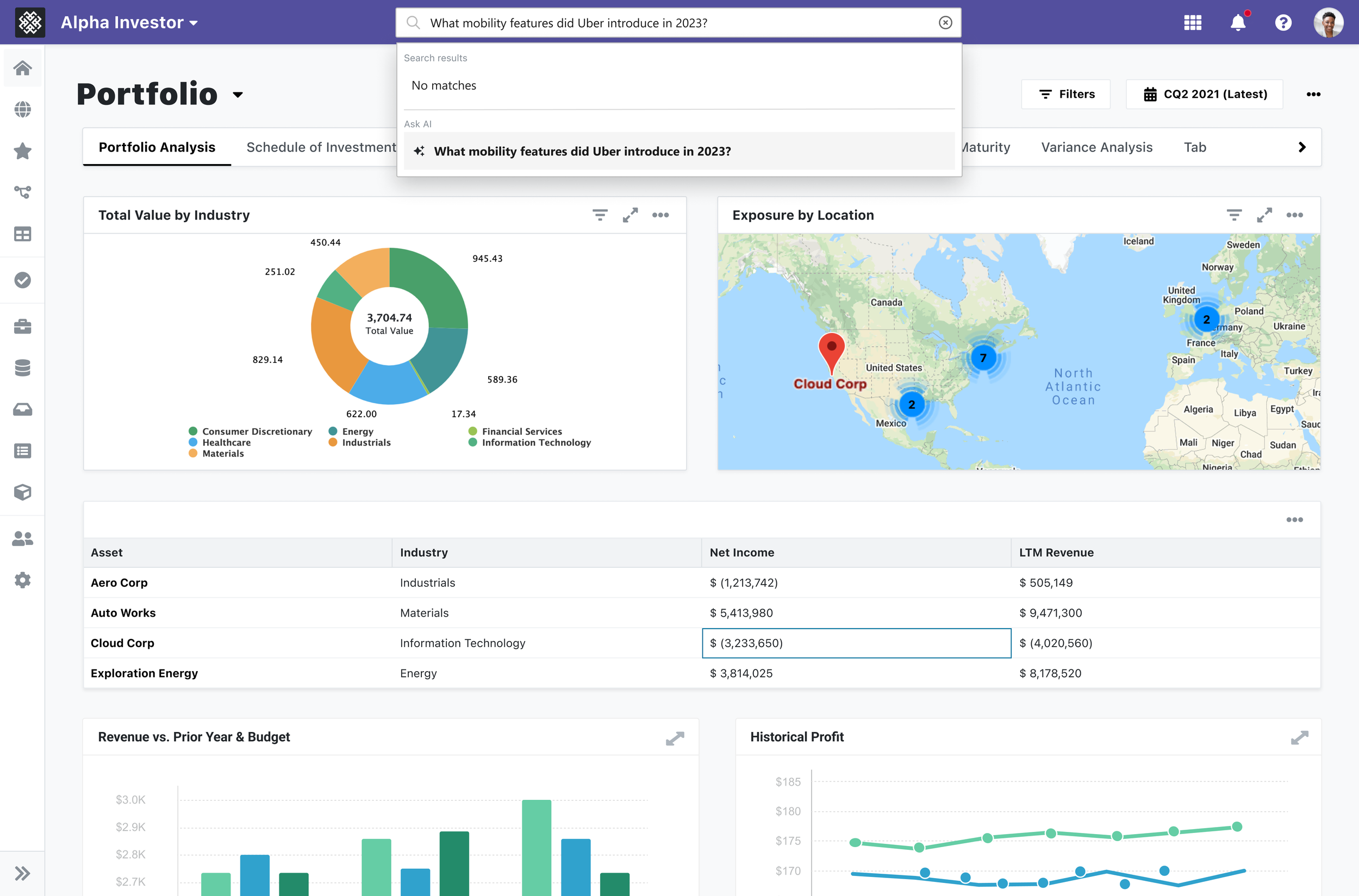
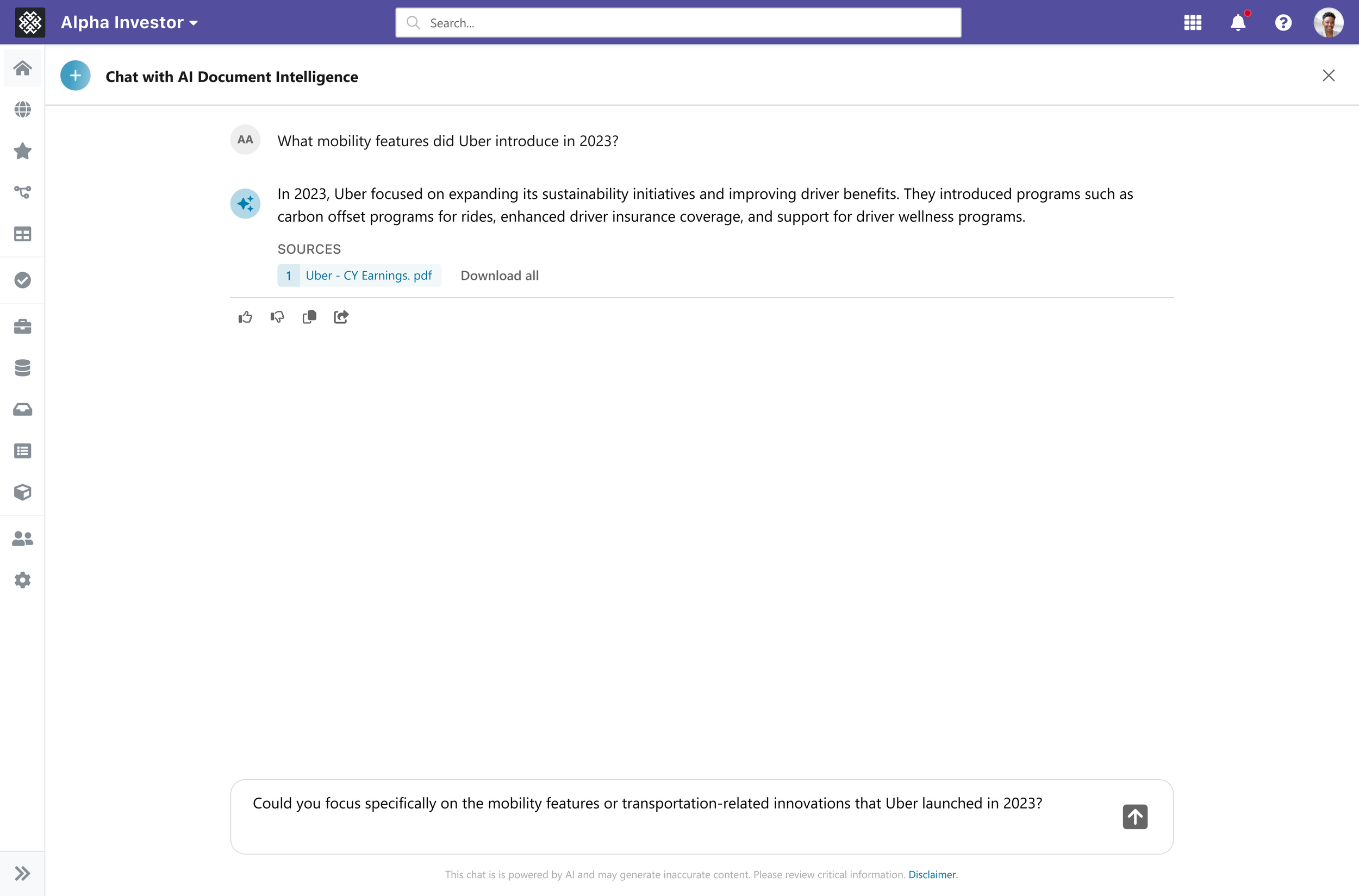
Integrated AI Doc Search into the top search bar.
Aligned with existing user behavior
Eliminated need for a new entry point
→ Reduced friction and increased discoverability
2
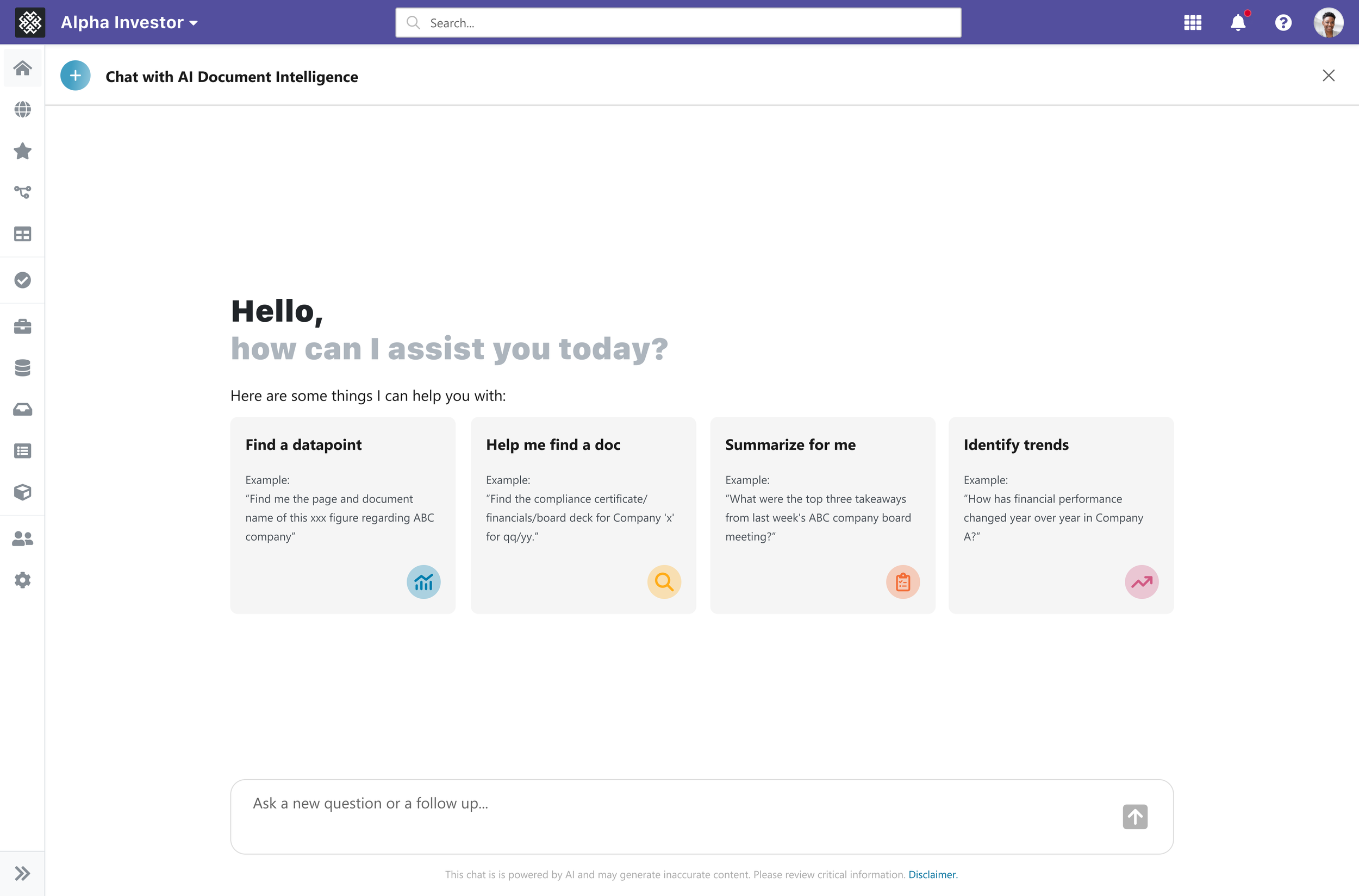
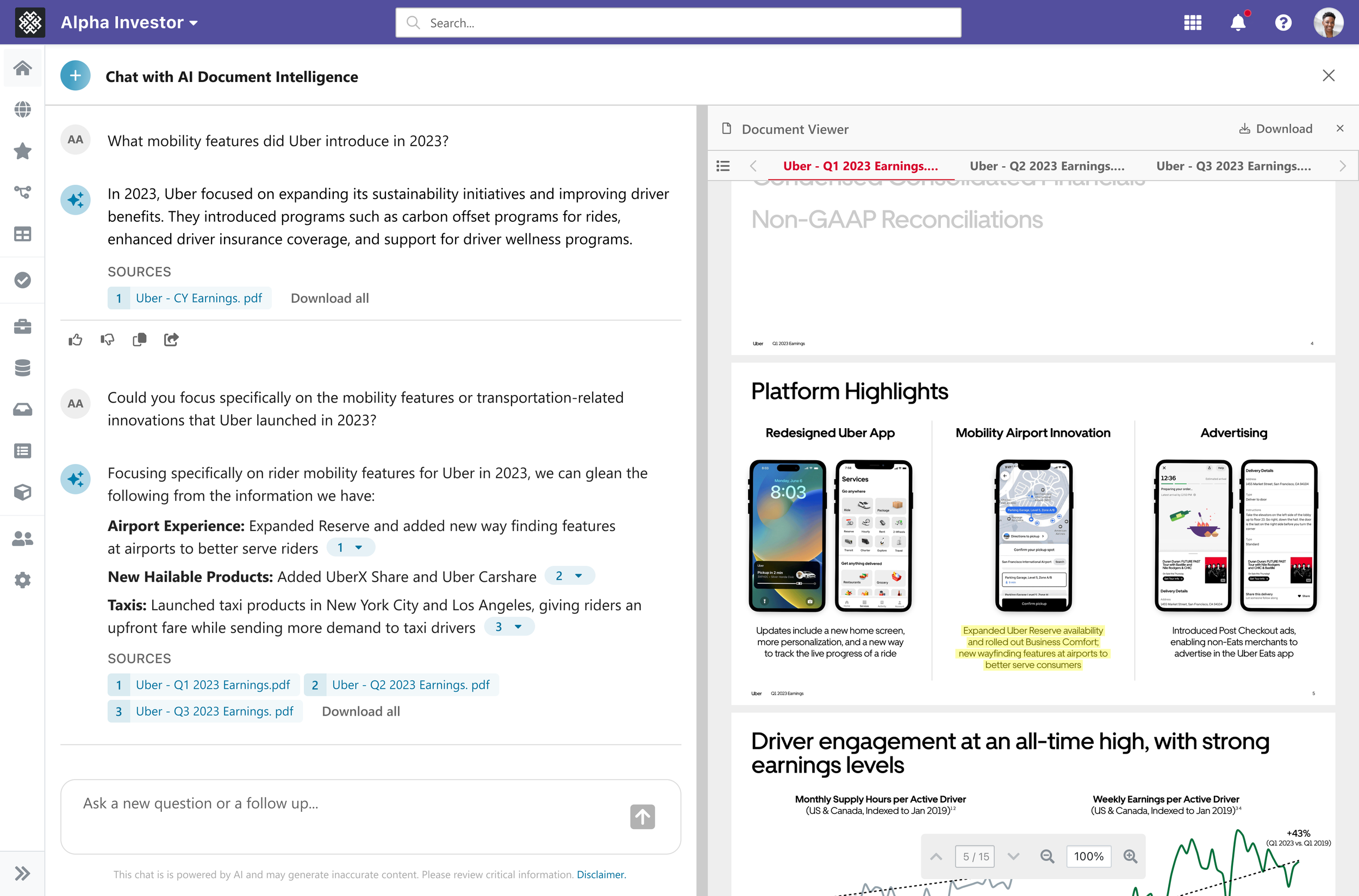
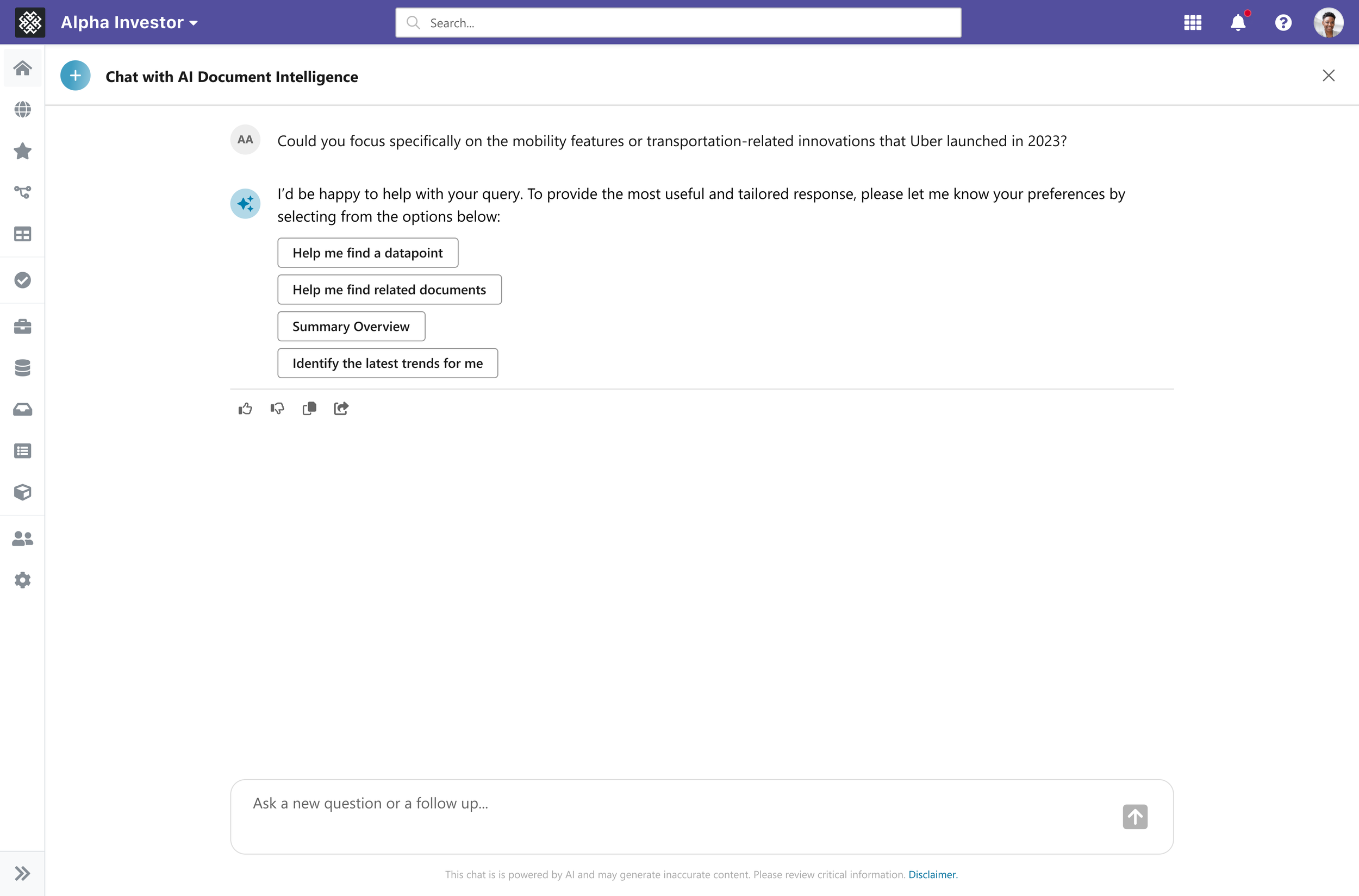
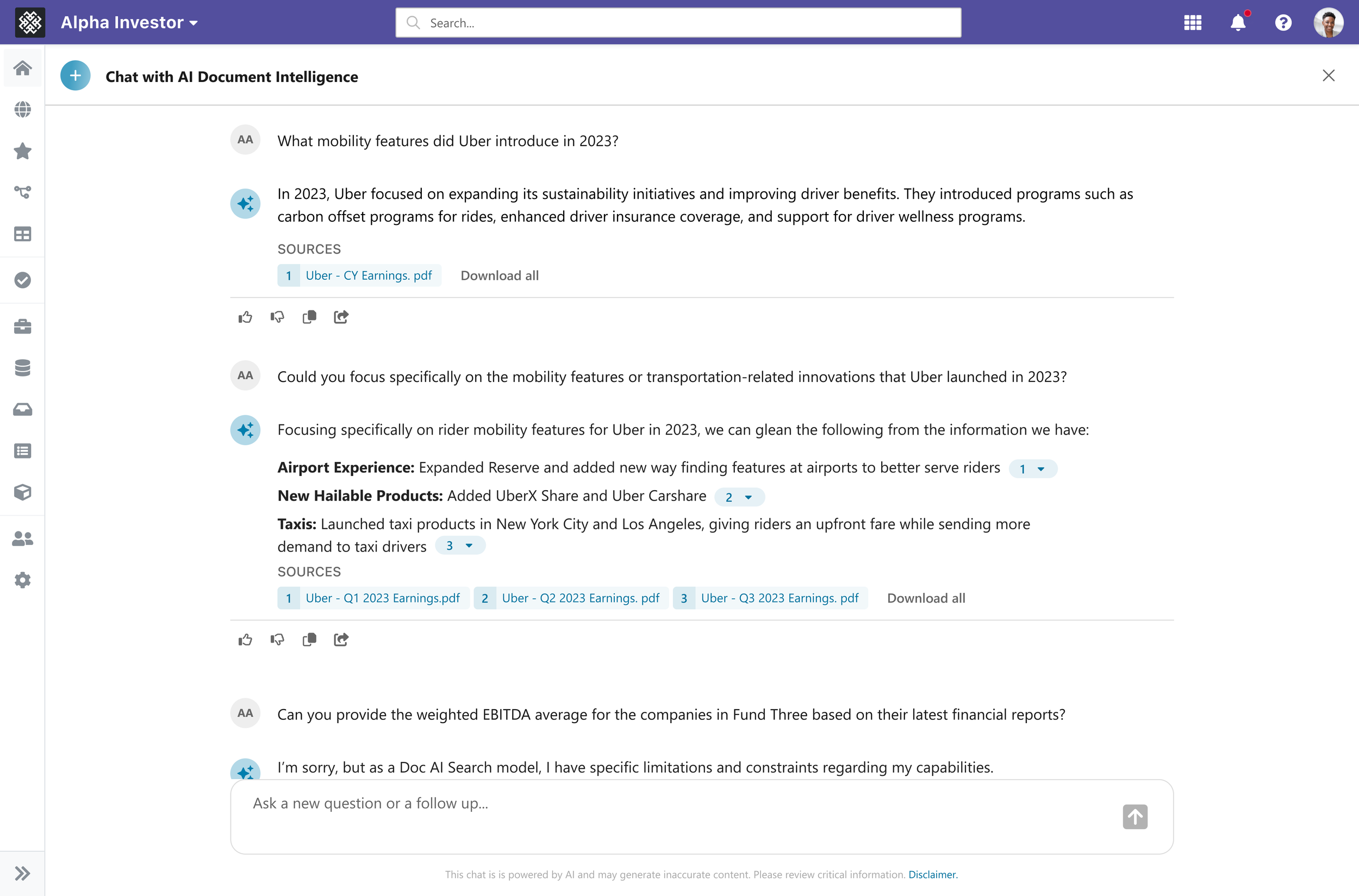
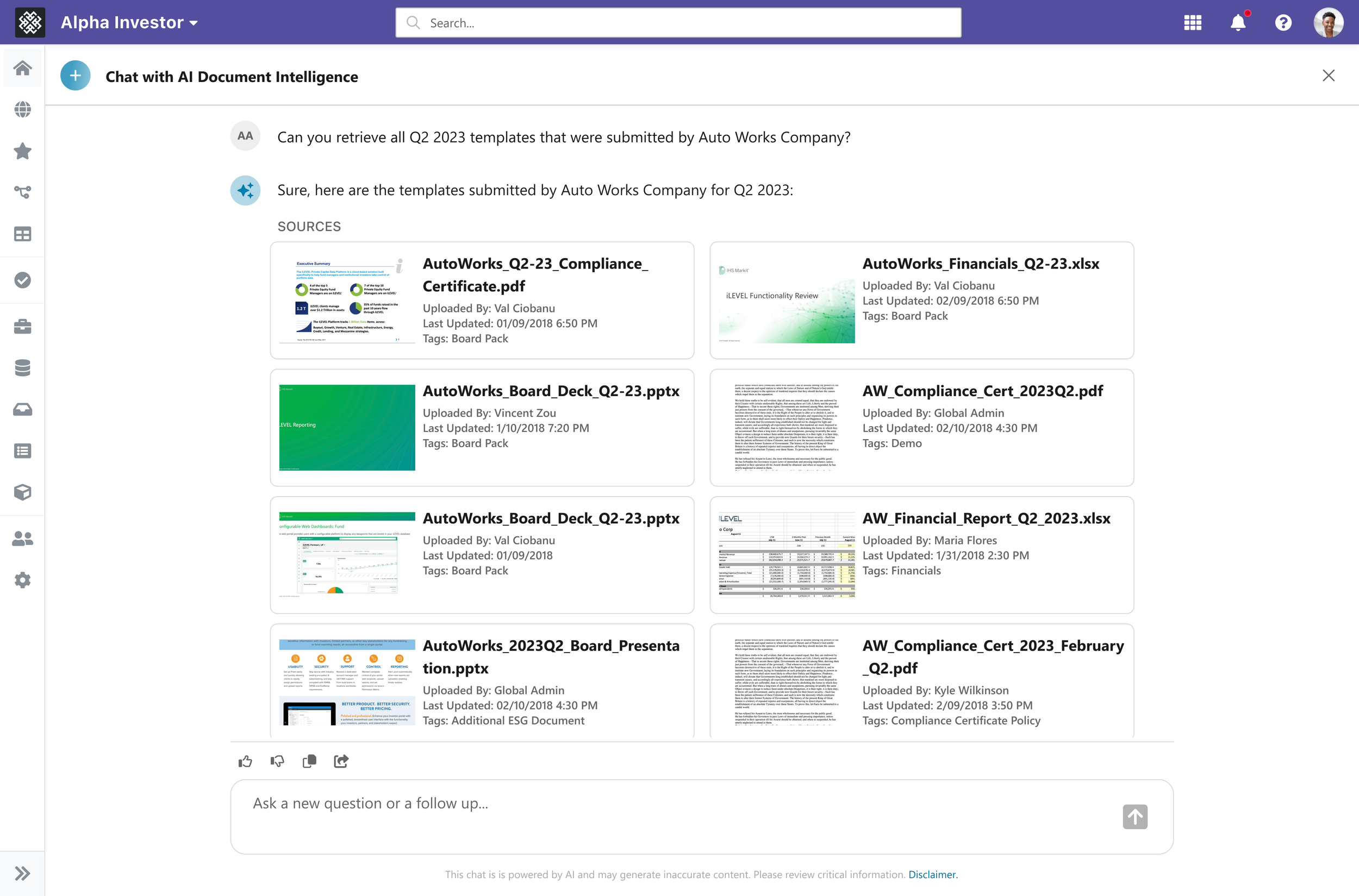
Introduced AI-generated summaries with source traceability with document viewer.
Combined synthesized insights with clickable citations
→ Balanced speed with trust and validation
3
Enabled multi-source context within results.
Connected insights across documents and data sources
→ Supported real-world financial workflows
4
Enable verifiable AI responses through document viewer.
Supported trust and validation by linking answers directly to source material
→ Enabled users to confidently act on insights without leaving the workflow
Final Design (Deliverables)
Business Outcomes
-
Strategic Impact: Positions iLEVEL as a centralized source of truth
-
Strategic Impact: Introduces scalable AI capabilities into core workflows
-
Strategic Impact: Aligns product with modern expectations for intelligent search
-
Deepens trust in our services and product.
ReflectionThis project reinforced that successful AI products are not defined by capability, but by how seamlessly they fit into existing user behavior.
I learned that:
Embedding into familiar patterns drives adoption more than introducing new features
Trust is a critical component of AI design and must be intentionally designed
The biggest opportunities often lie in reducing friction—not adding functionality